
Boutique Hotel Reservation Options: A Strategic Guide to Booking
The hospitality landscape has bifurcated. On one side, mass-market inventory—standardized, commoditized, and algorithmically priced—dominates the digital booking funnel. On the other, the boutique sector stands in stark opposition, defined not by volume, but by the specificity of the guest experience. For the independent operator and the discerning traveler alike, the process of booking is no longer a simple transactional bridge. It has become a complex navigation of distribution channels, loyalty structures, and data ownership that determines the quality, cost, and eventual outcome of the stay.
The friction in the current booking ecosystem is palpable. Digital distribution has democratized access to inventory, yet it has simultaneously introduced layers of obfuscation that frequently work against the interests of the property and the guest. When the reservation process relies heavily on intermediaries, the guest’s preference data—the very foundation of the boutique promise—is often lost in transmission. The challenge for the modern traveler is to identify which booking channel preserves the integrity of the stay, while the operator’s mandate is to steer demand toward channels that provide the highest net yield and the most robust connection to the guest.
This analysis dissects the mechanics of inventory distribution. It moves beyond the consumer-facing interface to examine the plumbing of the hospitality industry, providing a definitive guide for those who seek to understand the intricate reality behind the “Book Now” button.
Understanding “boutique hotel reservation options”
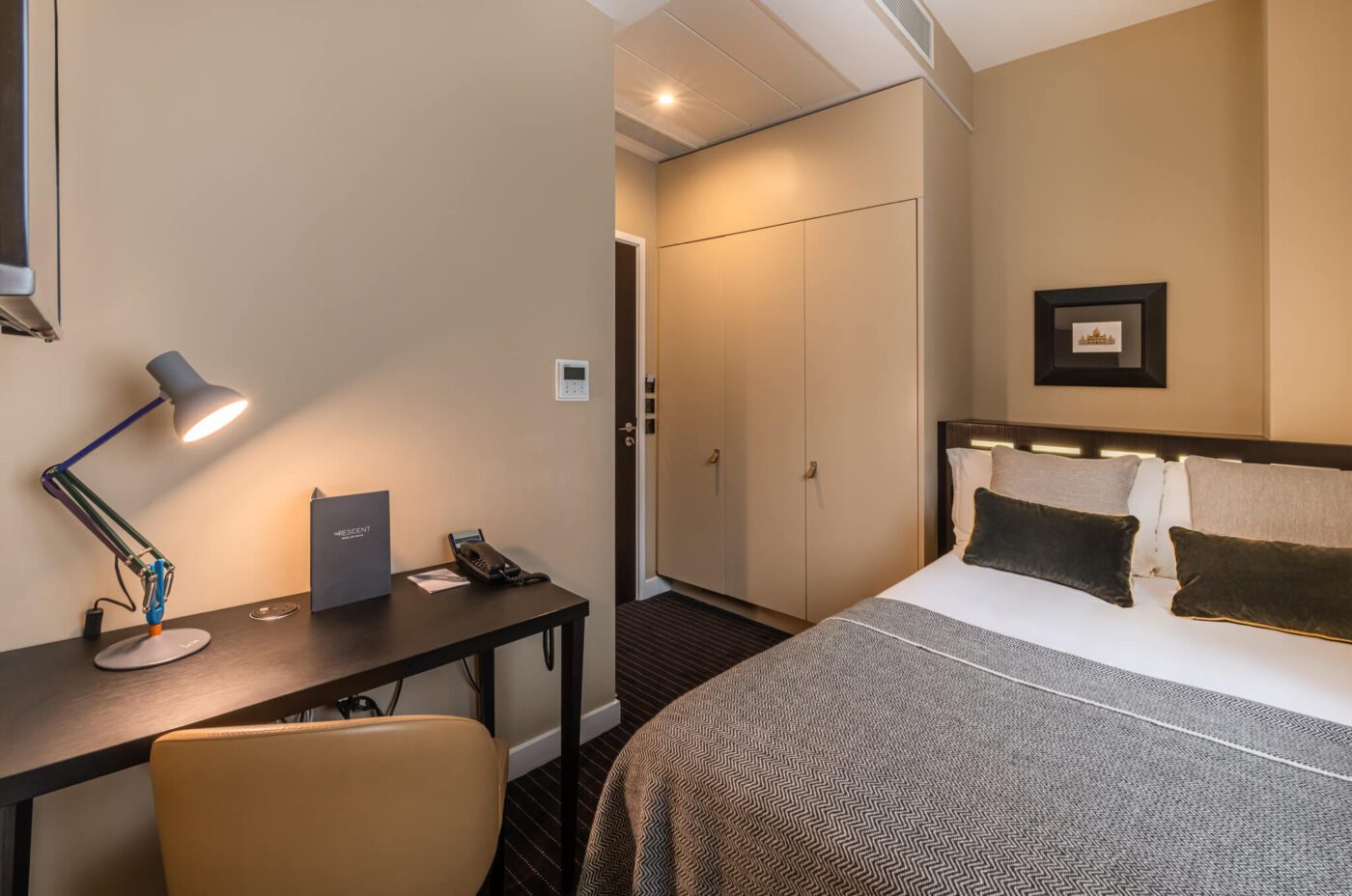
The process of evaluating boutique hotel reservation options is frequently reduced to a comparison of nightly rates on aggregator websites. This is a fundamental error. Price is merely one variable in a complex equation that includes service priority, cancellation flexibility, loyalty recognition, and the underlying contractual relationship between the booking platform and the property. When a guest books via a third-party intermediary, they are often unknowingly entering into a relationship defined by rigid constraints and split incentives.
The misunderstanding here is profound: guests often assume that all reservations are equal in the eyes of the hotelier. In reality, a reservation secured via a “merchant model” OTA (Online Travel Agency) is processed, recorded, and valued differently than a direct booking. The hotel sees the former as a transaction with a heavy commission tax, while the latter is viewed as the beginning of a direct, high-value relationship. To simplify these diverse booking paths into a single category of “a confirmed room” is to ignore the structural incentives that drive hotel operations.
Oversimplification, furthermore, prevents the sophisticated traveler from leveraging the system. By understanding the hotel’s back-end constraints, a traveler can identify which boutique hotel reservation options are most likely to result in a superior stay. This is not about “hacking” the system; it is about aligning the guest’s booking method with the hotel’s internal priorities to ensure the most seamless and recognized experience possible.
Deep Contextual Background: The Evolution of Distribution
The trajectory of hospitality distribution has moved from a reliance on physical GDS (Global Distribution Systems) nodes and travel agency networks to the chaotic, hyper-competitive digital marketplace of the present. For decades, the independent hotel was isolated; it lacked the marketing budget to compete with the sprawling reach of Hilton or Marriott. Third-party aggregators filled this void, promising “visibility” in exchange for significant commission percentages.
This created a dependency loop. Boutique properties, eager for occupancy, offloaded their inventory management to these platforms. However, as the digital landscape matured, properties realized that ceding control of the reservation process also meant ceding control of the guest. The current era is defined by the “Direct Booking War.” Boutique operators are investing heavily in proprietary technology—CRM integration, dynamic pricing engines, and personalized booking portals—to reclaim the reservation process. We are now in a phase where the “best” channel is no longer dictated by reach, but by the level of service and recognition it enables.
Conceptual Frameworks: The Disintermediation-Efficiency Trade-off
To analyze the efficacy of different booking channels, one must employ specific mental models:
-
The Margin-Retention Matrix: This framework evaluates the trade-off between the cost of acquisition (CAC) and the net profit. A booking via a global OTA might be high-volume, but the margin retention is low. Conversely, a direct booking might be high-effort to capture, but the long-term lifetime value (LTV) of that guest is significantly higher due to the ability to market directly to them post-stay.
-
The Recognition Gap Model: This theory posits that the further removed a reservation is from the property’s central reservation system, the higher the likelihood of a “recognition failure” upon check-in. If a guest’s preferences are not passed through the booking chain, the boutique promise is effectively voided.
-
The “Barrier-to-Booking” Variable: Every click, form field, and third-party redirect is a barrier. When you analyze boutique hotel reservation options, you must assess which channel minimizes the friction between intent and confirmation without sacrificing data integrity.
Key Categories and Taxonomic Variations
The distribution ecosystem is divided into distinct operational tiers. Understanding the nuances of each is essential for making an informed choice.
| Category | Primary Mechanism | Strategic Value to Hotel | Service Impact |
| Direct (Web/Phone) | Property CRM | High (Max Margin) | Highest (Customization) |
| Merchant OTA | Fixed Inventory Allocation | Medium (Market Penetration) | Low (Data Obfuscation) |
| Agency/Consortia | Preferred Vendor/GDS | High (Niche Audience) | High (Vetted Experience) |
| Wholesale/Tour Op | B2B Bulk Inventory | Low (Commoditized) | Negligible |
| Affiliate/Referral | Trust-Based Curation | Medium (Conversion) | Moderate |
Evaluating boutique hotel reservation options entails a recognition that “Direct” is the gold standard for the property, while “Consortia” often provides the best balance for the guest seeking high-end perks (like late checkout or breakfast inclusions) that are not available through generic discount portals.
Real-World Scenarios: Navigating Operational Constraints
1. The “Peak Demand” Surge
During local festivals or high-demand dates, inventory is scarce. A traveler booking via a major OTA may find “no availability,” while the hotel’s direct website, utilizing dynamic inventory management, may still show open rooms. When examining boutique hotel reservation options in high-stakes environments, the direct channel is almost invariably the only one with full, real-time access to the house.
2. The “Negotiated Rate” Anomaly
Corporate travelers often hold negotiated rates. When booking via an OTA, these rates are often invisible, forcing the guest to pay a “public” rate that is significantly higher. The failure mode here is the assumption that the OTA is “cheaper.” In this context, the reservation must be routed through the property’s specific corporate booking tool to be valid.
3. The “Double-Booking” Failure
A reservation is made via an OTA, but due to a latency issue in the channel manager software, the room is already sold. The OTA confirms the booking, but the hotel has no record. The resulting friction upon arrival is catastrophic for the boutique experience. This is a compounding risk inherent in multi-channel distribution.
Planning, Cost, and Resource Dynamics
The economic friction of the reservation process is often invisible to the guest but is the primary driver of property-side operations.
| Resource Factor | Direct Reservation | OTA Reservation |
| Cost of Acquisition | Low (Internal labor) | High (Commission 15-25%) |
| Data Integrity | Perfect (Owns the profile) | Poor (Masked Email/Phone) |
| Flexibility | High (Policy waiver possible) | Low (Contractual rigidity) |
| Operational Effort | Low (Automated) | High (Reconciliation) |
The variability here is extreme. For a boutique property, an OTA booking is an operational tax; for the guest, it is a convenience. The strategic goal for an intelligent traveler is to find the “Direct” path that provides the convenience of the digital booking without the loss of service fidelity.
Strategies for Assessment and Discovery
To determine the optimal reservation path, utilize these investigative strategies:
-
The “Price Parity” Audit: Before booking via an OTA, check the hotel’s direct site. If the price is identical, book direct. The property will often throw in “hidden” perks (welcome drinks, room upgrades) that are not present on the third-party portal.
-
The “Concierge Inquiry”: For complex bookings (suites, multi-room), email the property directly. The information gathered during this interaction is a leading indicator of the service level you can expect during your stay.
-
The “Loyalty Lever”: If the property is part of a boutique consortia (e.g., Small Luxury Hotels, Leading Hotels of the World), booking through their specific portal provides status-based benefits that are invisible to the general market.
The Risk Landscape and Failure Modes
The primary risks in reservation management are systemic rather than individual.
-
Data Silo Fragmentation: When a guest uses multiple channels over time, the hotel ends up with three different “profiles” for the same person, preventing any meaningful recognition or service personalization.
-
Algorithmic Disintermediation: Some booking sites use “shadow pricing,” showing different rates to different users based on browsing history, which can lead to distrust when the guest discovers a different price on a public forum.
-
The “Black Hole” Effect: When a booking is made via an anonymous OTA email address, the property cannot send pre-arrival information, dinner reservation links, or transport logistics, leading to a diminished, disconnected experience.
Governance, Maintenance, and Long-Term Adaptation
The responsibility for a smooth reservation lies as much with the property as with the guest.
-
Layered Checklist: For the property, the governance involves a daily audit of “Channel Performance.” Are we over-reliant on high-commission channels? If so, the marketing strategy must pivot to direct-conversion.
-
Adjustment Triggers: If the “cancellation rate” of a specific OTA source exceeds 30%, the property should immediately restrict that channel’s inventory to mitigate revenue leakage. This is a critical component of healthy inventory management.
Measurement: Tracking and Evaluation
How does an operator, or a sophisticated guest, know the reservation path is optimal?
-
Leading Indicators: “Conversion-to-Inquiry Ratio” for direct channels. If the website receives traffic but lacks bookings, the booking engine is likely too complex.
-
Lagging Indicators: “Net RevPAR.” This is the revenue per available room after commissions are paid. This is the only number that truly matters for the property’s viability.
-
Qualitative Signals: Guest sentiment post-stay. Did they feel “known”? This is the ultimate test of the reservation path’s integrity.
Common Misconceptions and Oversimplifications
-
“OTAs are always cheaper”: This is a pervasive myth. Properties often offer better rates or “value-add” packages directly to ensure parity and protect their margins.
-
“Direct booking is harder”: Modern boutique booking engines are often as streamlined as any global OTA.
-
“Travel agents are obsolete”: In the boutique sector, high-end travel advisors have more power than ever. They act as “gatekeepers” who can unlock upgrades and status that the public never sees.
-
“Room assignment is random”: Room assignment is a direct reflection of the booking channel. Direct bookers and high-value status holders are prioritized for the best inventory.
-
“Cancellation policies are fixed”: They are fixed for the OTA. They are negotiable for the direct booker in the event of unforeseen personal circumstances.
-
“Privacy doesn’t matter”: Sharing your personal data with an unregulated third-party aggregator is a risk. Direct booking keeps your data within the hospitality ecosystem.
Ethical and Contextual Considerations
The ethics of the reservation process center on transparency. When a guest books via a site that simulates a “direct” experience but is actually an undisclosed intermediary, the trust is breached before the stay begins. Boutique hotels have an ethical responsibility to clarify their channels. Conversely, guests have a responsibility to understand the value exchange. If you use the hotel’s staff time to plan a complex itinerary and then book the room through a budget aggregator that pays the hotel nothing for that service, you are eroding the sustainability of the very service you enjoy.
Conclusion
Ultimately, the strategic choice of boutique hotel reservation options defines the trajectory of the entire guest experience. The reservation is not merely a logistical step; it is the first act of the service cycle. By bypassing the obfuscation of the mass-market aggregators and establishing a direct, transparent relationship with the property, the traveler secures not just a room, but a seat at the table. For the hotelier, reclaiming this relationship is the only path to sustainable profitability and brand resilience in an increasingly crowded and commoditized world. The goal is to move from a culture of “transactional acquisition” to “relational retention,” ensuring that every guest is recognized, every preference is honored, and every stay is a coherent extension of the brand’s promise.